-
About Us
-
Donors
-
Foundations & Projects
-
Beneficiaries
-
News
News
Events
Universal Education
Towards impact-driven philanthropy: how can funders assess and develop their impact?
Events
Universal Education
Reporting from the breakfast roundtable held on 18 June 2026.
How can funders better understand the real effects of the initiatives they support? And how can evaluation become a tool for learning and progress, rather than a constraint?
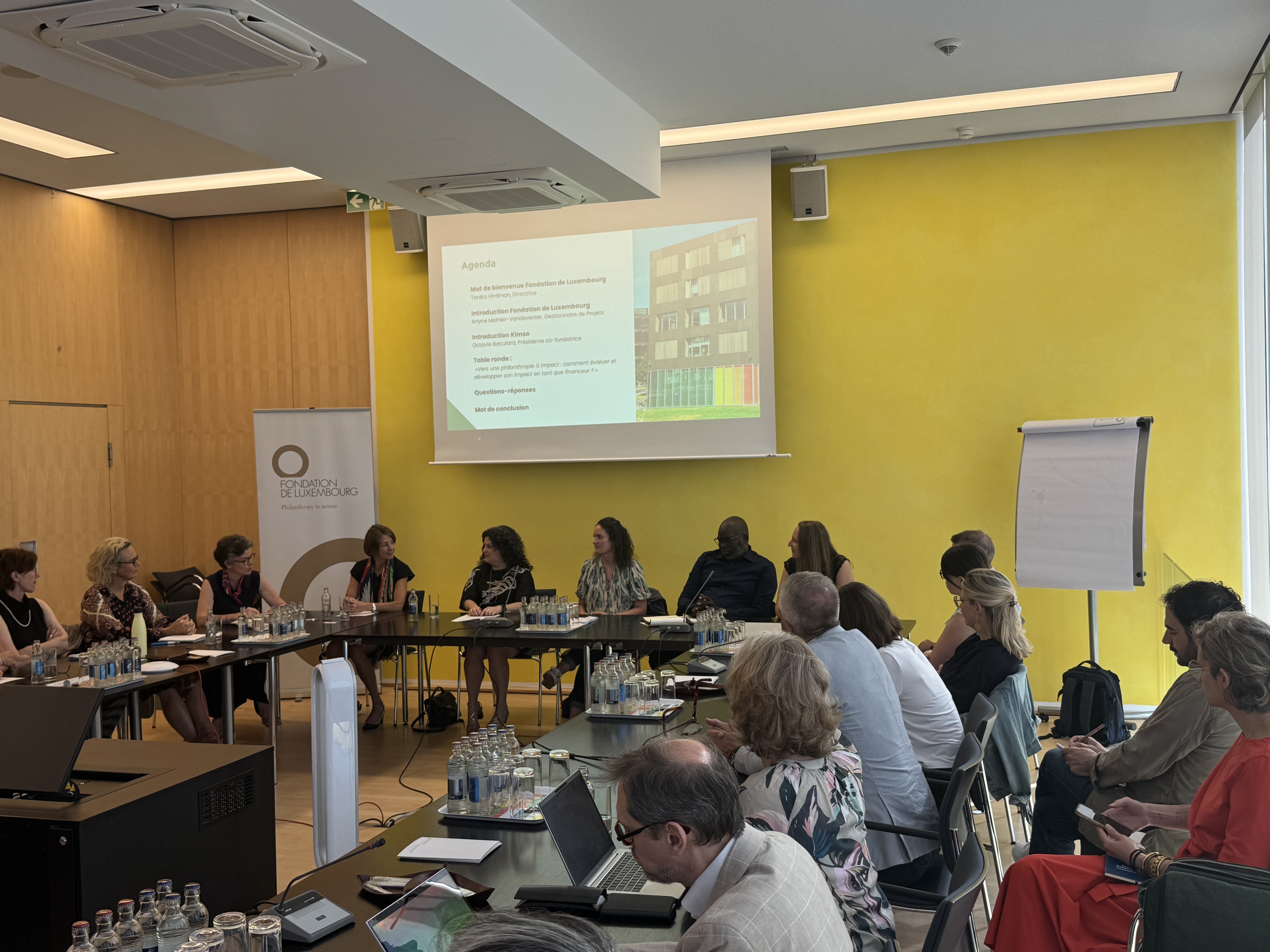
These questions were at the heart of the breakfast roundtable organized by the Fondation de Luxembourg on 18 June 2026, in partnership with Kimso, a French consultancy specializing in social impact assessment. Held under the theme “Towards Impact-Driven Philanthropy: How Can Funders Assess and Develop Their Impact?”, the event brought together more than 30 members of the Fondation de Luxembourg’s local network of partners, foundations and beneficiary organizations for a practical discussion on the growing role of impact assessment in philanthropy.
The roundtable was introduced by the Fondation de Luxembourg and facilitated by Kimso, represented by Octavie Baculard, President and Co-founder, and Cécile Rossi, International Director. Kimso opened the discussion by emphasizing that social impact assessment is not merely a technical exercise, but also a reflective process: understanding what changes, for whom, and how philanthropic support can contribute to more meaningful and lasting transformation.
The discussion was structured around three presentations, offering complementary perspectives from funders and project implementers. Astrid Campistron, Executive Director of the Fondation Indosuez, presented the foundation’s impact assessment approach, launched around its tenth anniversary. Camille Ceccaldi, Project Officer at the Luxembourg NGO Guiden a Scouten fir ENG Welt, shared the organization’s approach to evaluating the projects it supports, particularly through its long-standing partnership with the Senegalese NGO Jeunesse et Développement (JED) in Senegal. Finally, Ibrahima Gueye, Executive Director of JED, brought the perspective of an organization working directly in the field.
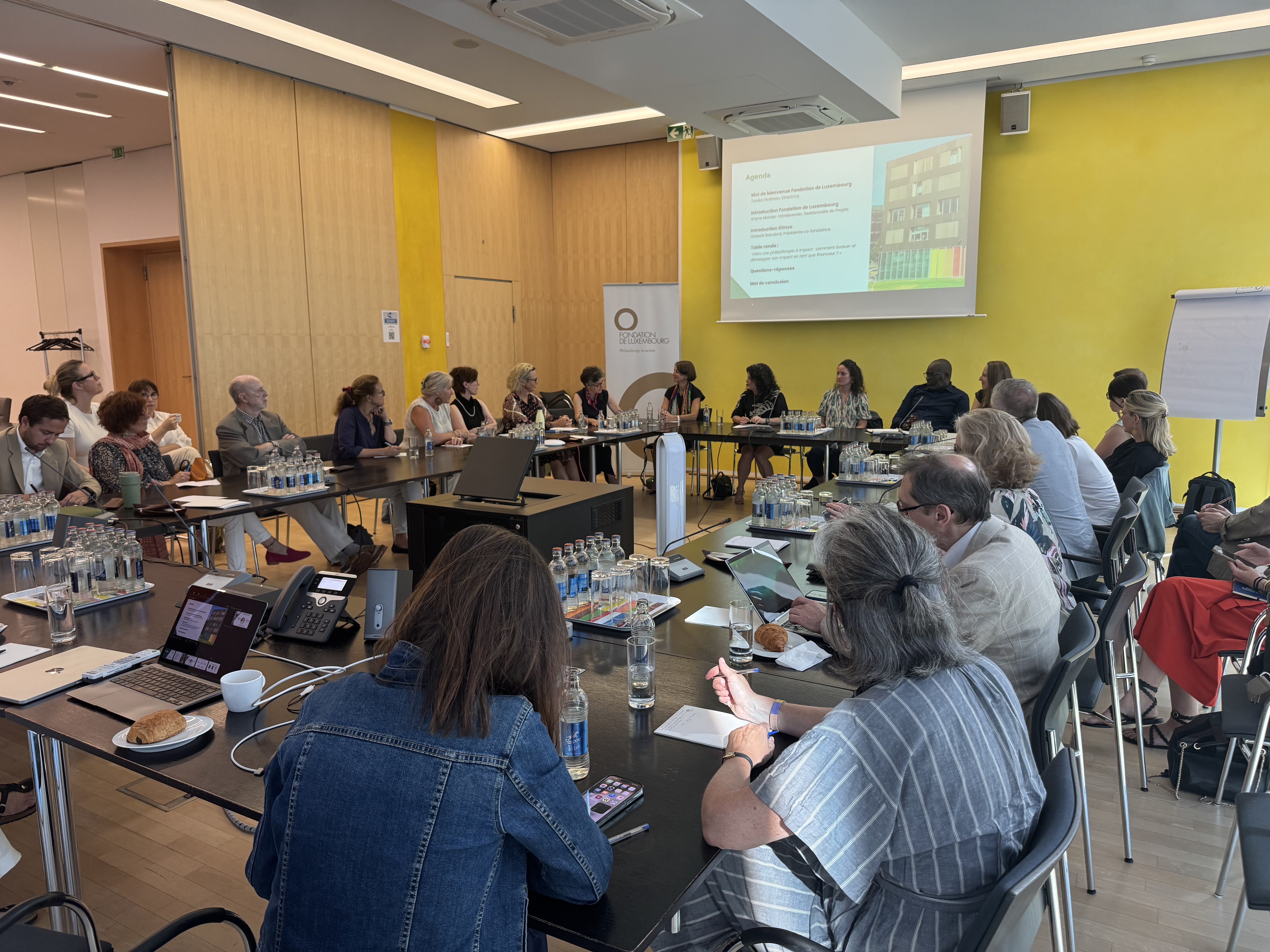
Together, the speakers highlighted a central message: impact assessment should not be seen as a control mechanism, but as a shared learning process. When carefully designed and properly followed up, evaluation can help organizations identify what works, adjust what needs to be improved, and build stronger, more transparent relationships between funders and the organizations they support.
The discussion that followed allowed participants to share their own experiences, challenges and questions around impact measurement. It also offered members of the Fondation de Luxembourg’s local network an opportunity to deepen their understanding of evaluation methods, which are becoming an increasingly important practice in the philanthropic sector.
Through events such as this breakfast roundtable, the Fondation de Luxembourg continues to encourage dialogue around emerging topics in order to support philanthropy that is more thoughtful, more effective and more strongly focused on impact.
